repaired · 2023 Q2
Steering: electric power assist system
Risk. A loss of power steering, particularly at lower speeds increases the risk of a crash.
NHTSA has logged 304 owner complaints about the 2015 GMC Canyon, most often about the steering. It is covered by 8 safety recalls, and for recall 21V-213 the manufacturer reports only 65% of affected cars repaired.
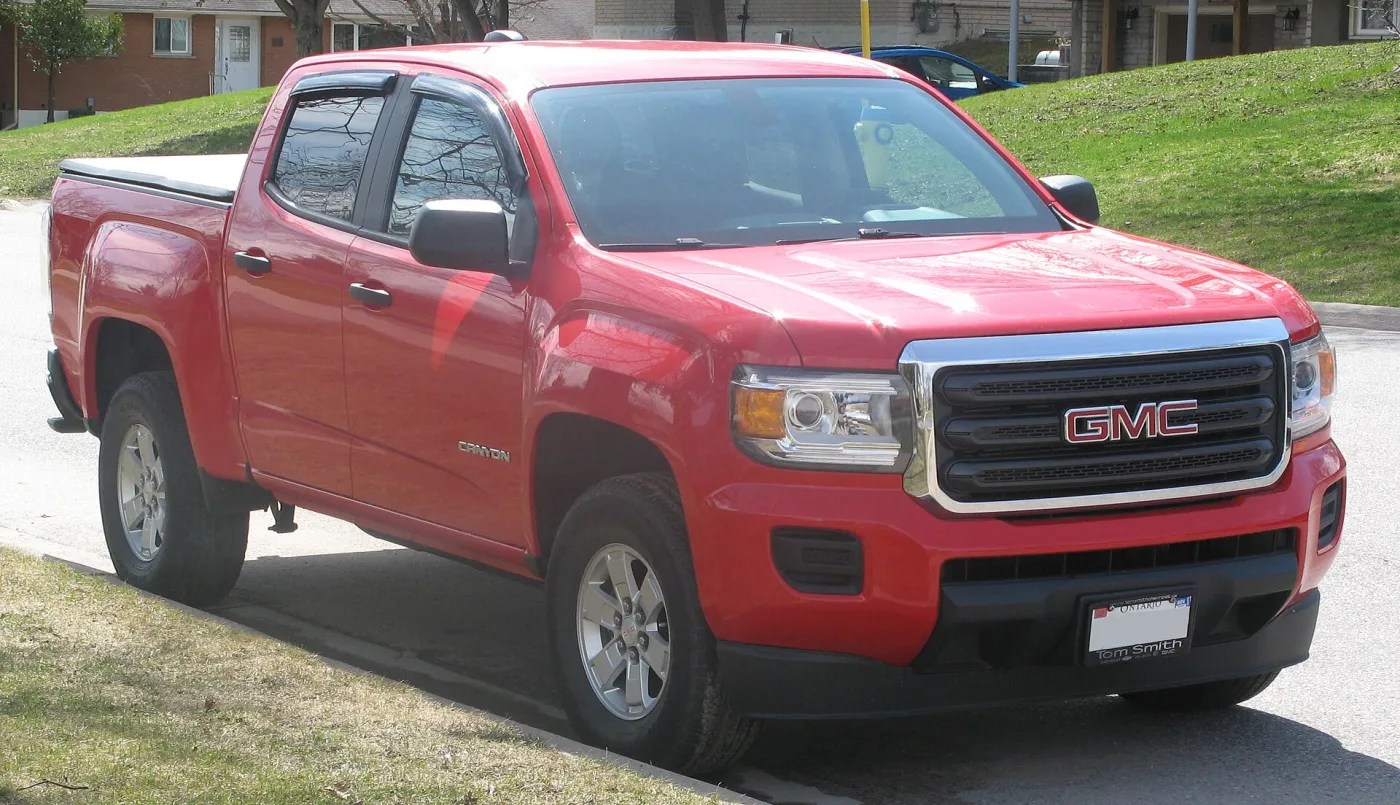
Source: NHTSA complaints, recalls, investigations and manufacturer recall reports, through November 5, 2026. Updated daily. Photo: SsmIntrigue, CC BY-SA 4.0.
304 complaints grouped by the system owners reported.
| System | Complaints | Crash, fire or injury |
|---|---|---|
| Steering | 227 | 4 |
| Power train | 38 | 1 |
| Electronic stability control (ESC) | 36 | 1 |
| Electrical system | 32 | 5 |
| Engine | 13 | 1 |
| Service brakes | 8 | 0 |
| Air bags | 7 | 4 |
| Visibility/wiper | 6 | 0 |
| Fuel/propulsion system | 5 | 0 |
| 9 other systems | 18 | 4 |
Source: NHTSA Office of Defects Investigation. Complaints are submitted by the public and are not verified by NHTSA.
Each ring shows the share of affected cars repaired, from the manufacturer’s latest quarterly report to NHTSA. Recall repairs are free at authorized dealers.
Risk. A loss of power steering, particularly at lower speeds increases the risk of a crash.
Risk. A damaged fuel line can create a fuel leak, increasing the risk of a fire.
Risk. An improperly inflated air bag increases the risk of injury in a crash.
Risk. A loss or reduction in power steering assist may increase the risk of a crash.
Risk. If the vehicle experiences a brake fluid leak it can increase the stopping distance, increasing the risk of a vehicle crash.
Risk. If the seat-frame attachment hooks are not secured properly, the seat may not be adequately anchored to the vehicle, and in the event of a crash, the seat…
Risk. If the inflator separates from the back plate in the event of a crash necessitating deployment of the driver's frontal air bag, this may cause the air bag or…
Risk. If the driver air bag does not deploy as designed, there is an increased risk of driver injury in the event of a crash necessitating air bag deployment.
Recalls apply to specific cars. To see whether a recall is still open on yours, enter the 17-character VIN at nhtsa.gov/recalls or with GMC.
68kmiles, median
Based on the odometer reading in 162 steering complaints. 81% were reported before 100,000 miles.
Dollar amounts owners wrote in their complaints when describing a repair or a quote. These are not price estimates; a system is shown only when at least 8 owners mentioned a cost.
$1,000median
If a problem is covered by a recall, the dealer fixes it for free. Some manufacturers also reimburse owners who paid for a repair before a recall was announced.
Bars show complaints per model year. Colors show the CarFlaw verdict: complaints weighted for crashes, fires and injuries, adjusted for years on the road and compared with the Canyon median. How we score
2015 GMC Canyon PU/EC RWD in NHTSA's New Car Assessment Program. Photos are from NHTSA's crash tests.
Federal investigations that included the 2015 GMC Canyon, and the recalls they led to.
Recent steering complaints filed with NHTSA, shortened. Personal details are removed.
The electric power steering assist completely failed while driving, causing an immediate crash hazard. The vehicle is a 2015 GMC Canyon suffering from the exact physical component failure and torque sensor defect detailed in NHTSA Campaign 21V213000. However, the manufacturer states this VIN is not…
The contact owns a 2015 GMC Canyon. The contact stated that while driving approximately 30 MPH, the "Power Steering Assist Lost" message displayed, and the steering wheel became stiff and difficult to turn in either direction. The vehicle was parked, and upon restarting the engine, the failure…
Power steering and stabalink malfunction causing a radom and very dangerous complete power steering failure. GM was forced to do two recalls for this failure, one in 2016 and another in 2021 but they excluded any Canyon made after May of 2015. The recall should include these as well because their…
Decode your VIN to see the recalls for your exact car, then confirm open recalls with NHTSA.