repaired · 2026 Q3
Occupant classification: front passenger
NewRisk. Air bags that deploy unintentionally during a crash increase the risk of injury.
NHTSA has logged 1,111 owner complaints about the 2019 Honda CR-V, most often about the forward collision avoidance. It is covered by 8 safety recalls, and for recall 23V-858 the manufacturer reports only 75% of affected cars repaired.
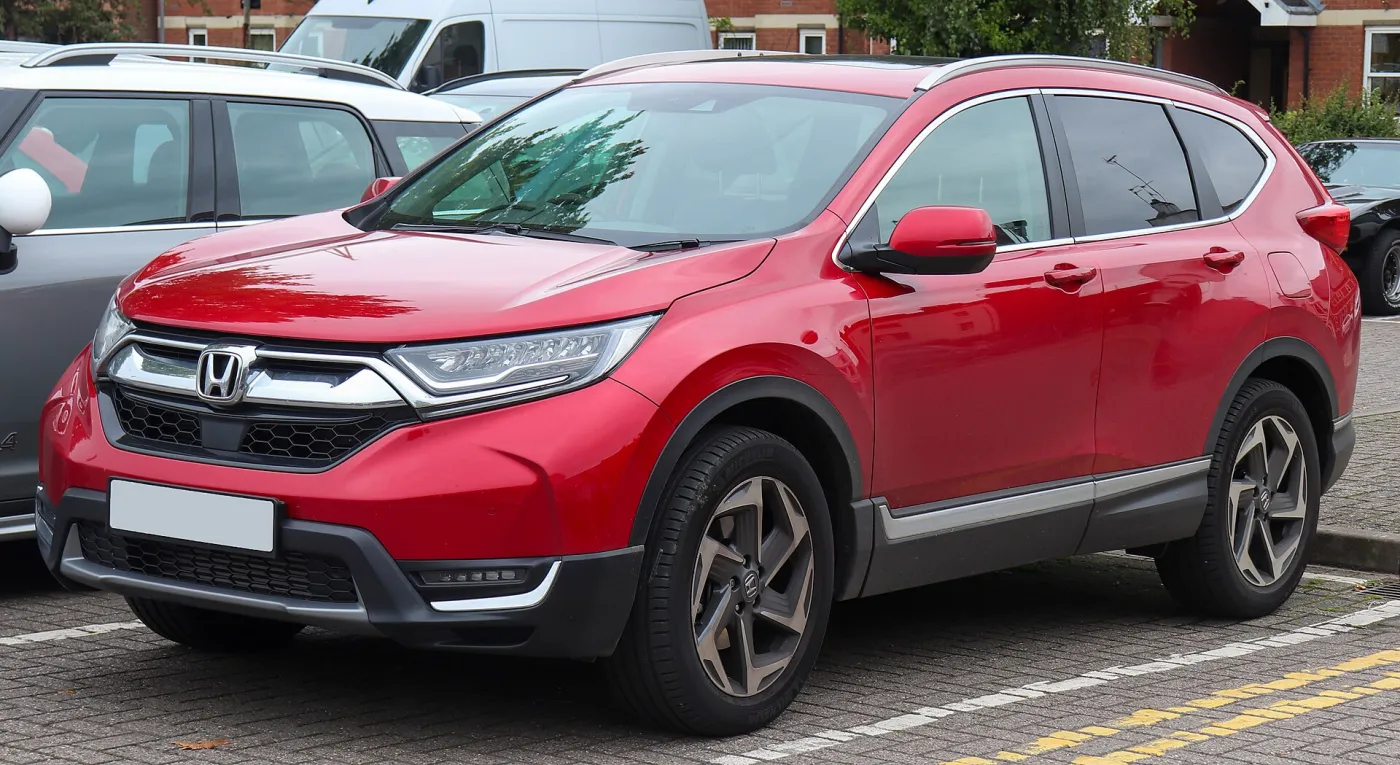
Source: NHTSA complaints, recalls, investigations and manufacturer recall reports, through November 10, 2026. Updated daily. Photo: Vauxford, CC BY-SA 4.0.
1,111 complaints grouped by the system owners reported.
| System | Complaints | Crash, fire or injury |
|---|---|---|
| Forward collision avoidance | 299 | 19 |
| Steering | 198 | 2 |
| Electrical system | 164 | 3 |
| Fuel/propulsion system | 146 | 2 |
| Fuel system, gasoline | 119 | 0 |
| Engine | 112 | 3 |
| Service brakes | 99 | 13 |
| Air bags | 79 | 12 |
| Communication | 38 | 1 |
| 19 other systems | 173 | 17 |
Source: NHTSA Office of Defects Investigation. Complaints are submitted by the public and are not verified by NHTSA.
Each ring shows the share of affected cars repaired, from the manufacturer’s latest quarterly report to NHTSA. Recall repairs are free at authorized dealers.
Risk. Air bags that deploy unintentionally during a crash increase the risk of injury.
Risk. Fuel pump failure can cause an engine stall while driving, increasing the risk of a crash.
Risk. An unlatched seat belt cannot properly restrain the seat occupant during a crash, increasing their risk of injury.
Risk. Fuel pump failure can cause an engine stall while driving, increasing the risk of a crash.
Risk. A separated rear subframe reduces vehicle handling and can suddenly disable the vehicle, increasing the risk of a crash.
Risk. If the front passenger does not correctly understand how the airbag functions, they may be at an increased risk of personal injury in the event of a crash.
Risk. The failed weld may allow fuel to leak, increasing the risk of a fire in the presence of an ignition source.
Risk. In the event of a crash, a disabled air bag would increase the risk of injury.
Recalls apply to specific cars. To see whether a recall is still open on yours, enter the 17-character VIN at nhtsa.gov/recalls or with Honda.
20kmiles, median
Based on the odometer reading in 38 forward collision avoidance complaints. 97% were reported before 100,000 miles.
Only 28% of complaints for this model year include a mileage.
Dollar amounts owners wrote in their complaints when describing a repair or a quote. These are not price estimates; a system is shown only when at least 8 owners mentioned a cost.
$4,279median
$2,000median
$1,865median
If a problem is covered by a recall, the dealer fixes it for free. Some manufacturers also reimburse owners who paid for a repair before a recall was announced.
Bars show complaints per model year. Colors show the CarFlaw verdict: complaints weighted for crashes, fires and injuries, adjusted for years on the road and compared with the CR-V median. How we score
2019 Honda CR-V SUV AWD in NHTSA's New Car Assessment Program. Photos are from NHTSA's crash tests.
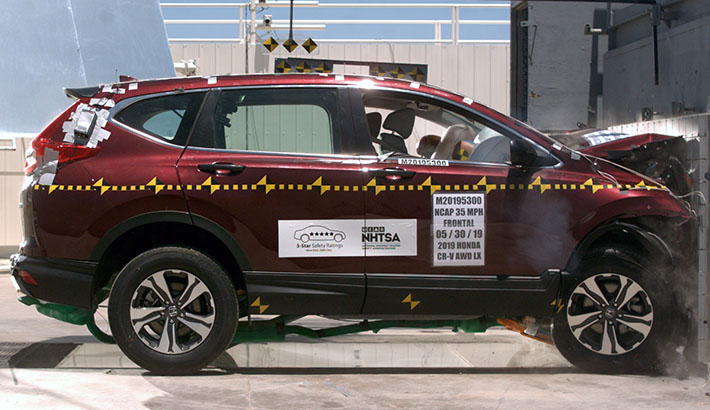
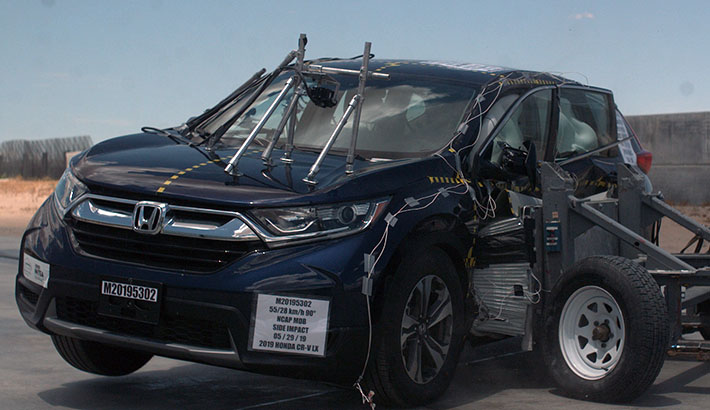
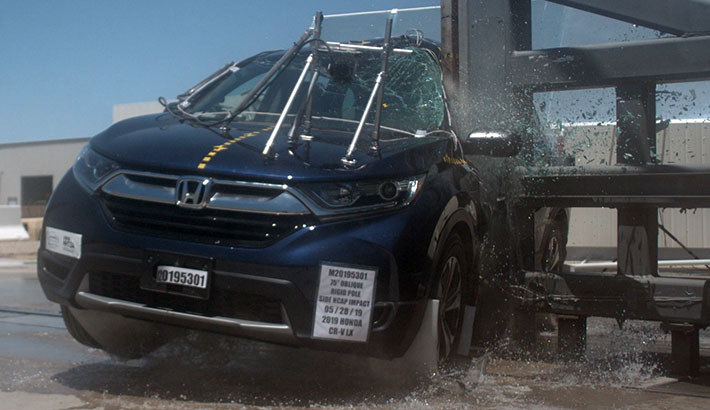
Federal investigations that included the 2019 Honda CR-V, and the recalls they led to.
Recent forward collision avoidance complaints filed with NHTSA, shortened. Personal details are removed.
I was driving about 20-25 mph. There was absolutely nothing in front of me and my car came to a dead stop, the brake warning light came up on the screen and I hit my head off the steering wheel. Then the warning went away and I drove the last 2 minutes home.
This emergency brake happened multiple times during crossing train tracks. I’m not sure if the sensor was capturing anything there but the car stopped immediately. Two incidents occurred in the same street and was after the traffic light turned green. Two times I had vehicles behind me but…
Car automatically hit the brakes for no apparent reason while going at 45 mph. There was no vehicle or any kind of obstacle ahead of behind. Also resulted in tightening of driver seat belt. No injuries. Vehicle was being operated by an authorized and licensed driver.
Decode your VIN to see the recalls for your exact car, then confirm open recalls with NHTSA.