no report yet
Exterior lighting: headlights
NewRisk. Headlight low beams that are too bright can reduce visibility for oncoming drivers, increasing the risk of a crash.
NHTSA has logged 455 owner complaints about the 2020 Tesla Model 3, most often about the forward collision avoidance. It is covered by 21 safety recalls, and for recall 21V00D000 the manufacturer reports only 79% of affected cars repaired.
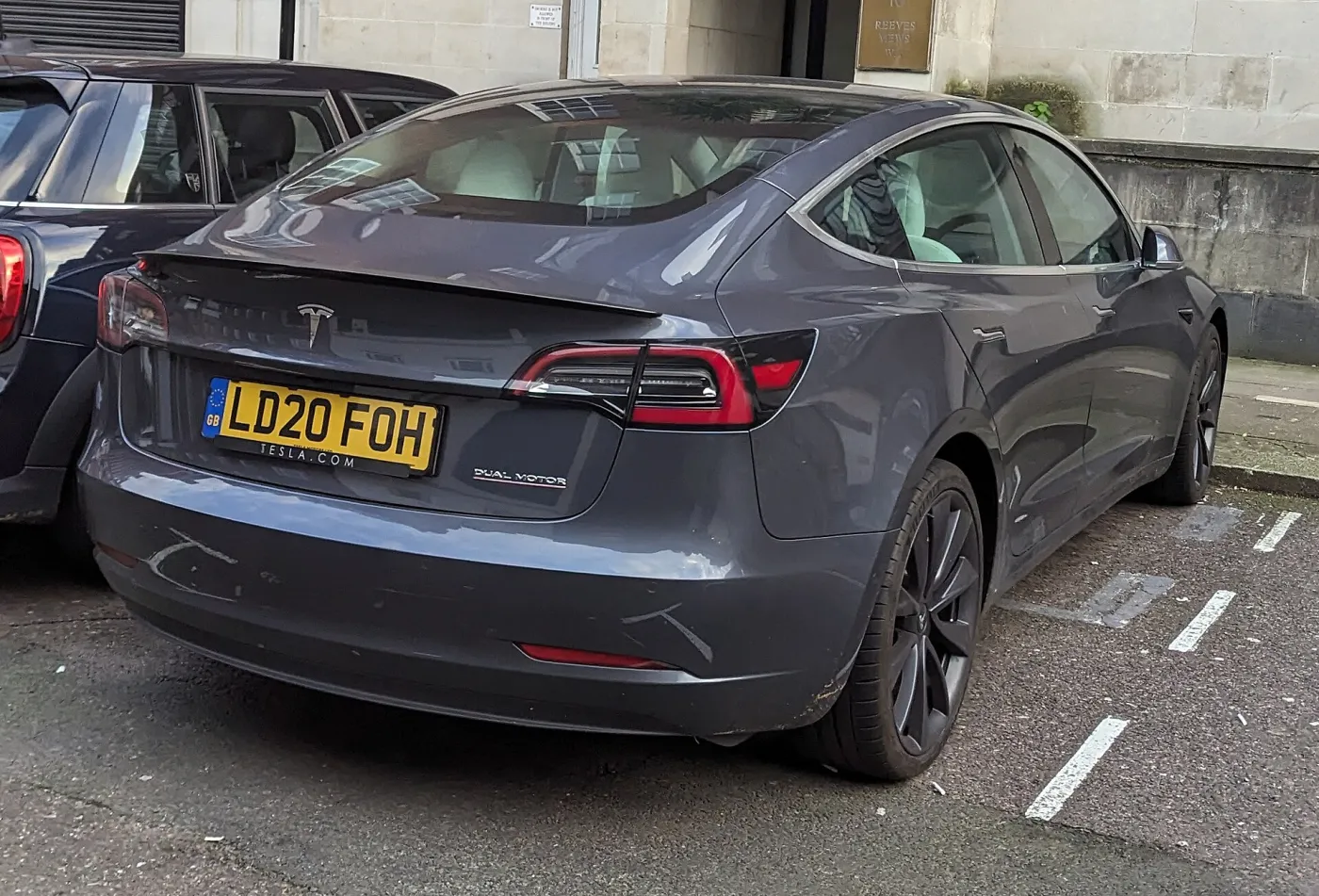
Source: NHTSA complaints, recalls, investigations and manufacturer recall reports, through October 31, 2026. Updated daily. Photo: Calreyn88, CC BY 4.0.
455 complaints grouped by the system owners reported.
| System | Complaints | Crash, fire or injury |
|---|---|---|
| Forward collision avoidance | 157 | 11 |
| Vehicle speed control | 70 | 18 |
| Steering | 48 | 8 |
| Suspension | 47 | 3 |
| Service brakes | 46 | 7 |
| Electrical system | 42 | 10 |
| Lane departure | 36 | 4 |
| Air bags | 30 | 10 |
| Seats | 23 | 2 |
| 13 other systems | 125 | 15 |
Source: NHTSA Office of Defects Investigation. Complaints are submitted by the public and are not verified by NHTSA.
Each ring shows the share of affected cars repaired, from the manufacturer’s latest quarterly report to NHTSA. Recall repairs are free at authorized dealers.
Risk. Headlight low beams that are too bright can reduce visibility for oncoming drivers, increasing the risk of a crash.
Risk. Driving with improperly inflated tires increases the risk of a crash.
Risk. A seat belt warning system that fails to alert occupants of an unbelted seat belt can increase the risk of injury during a crash.
Risk. Pedestrians may be unaware of an approaching vehicle if the PWS sounds are muted, increasing the risk of a crash.
Risk. Warning lights with a smaller font size can make critical safety information on the instrument panel difficult to read, increasing the risk of a crash.
Risk. In certain circumstances when Autosteer is engaged, and the driver does not maintain responsibility for vehicle operation and is unprepared to intervene as…
Risk. FSD Beta software that allows a vehicle to exceed speed limits or travel through intersections in an unlawful or unpredictable manner increases the risk of a…
Risk. An incorrectly reassembled seat belt anchor can impair the performance of the seat belt during a crash, increasing the risk of injury.
Risk. A closing window may exert excessive force by pinching a driver or passenger before retracting, increasing the risk of injury.
Risk. The driver may not know how fast the vehicle is traveling without the mph or km/h unit display, increasing the risk of a crash.
Risk. Pedestrians may be unaware of an approaching vehicle if the PWS sounds are obscured, increasing the risk of a crash.
Risk. A delayed rearview camera image reduces the driver's rear view, increasing the risk of a crash.
Risk. Pedestrians may be unaware of an approaching vehicle if the PWS sounds are obscured, increasing the risk of a crash.
Risk. The driver may be unaware that their seat belt is not fastened, increasing the risk of injury during a crash.
Risk. Failing to stop at a stop sign can increase the risk of a crash.
Risk. A rearview camera that does not function reduces the driver's rear view, increasing the risk of a crash.
Risk. Unexpected activation of the AEB system may cause the car to stop suddenly, increasing the risk of a crash.
Risk. A lateral link separation could shift the wheel alignment, causing instability and increasing the risk of a crash.
Risk. A twisted side curtain air bag may improperly deploy, increasing the risk of injury or occupant ejection during a crash.
Risk. An improperly attached fastener may prevent the seat belt system from performing as designed, increasing the risk of injury.
Risk. Contact with the rim may cause a loss of tire pressure, increasing the risk of a crash.
Recalls apply to specific cars. To see whether a recall is still open on yours, enter the 17-character VIN at nhtsa.gov/recalls or with Tesla.
Bars show complaints per model year. Colors show the CarFlaw verdict: complaints weighted for crashes, fires and injuries, adjusted for years on the road and compared with the Model 3 median. How we score
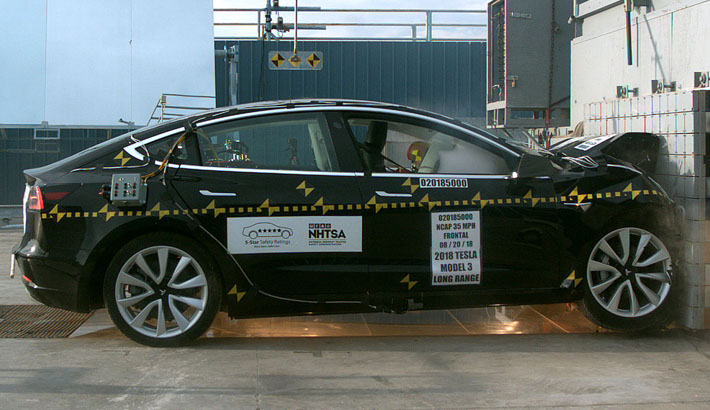
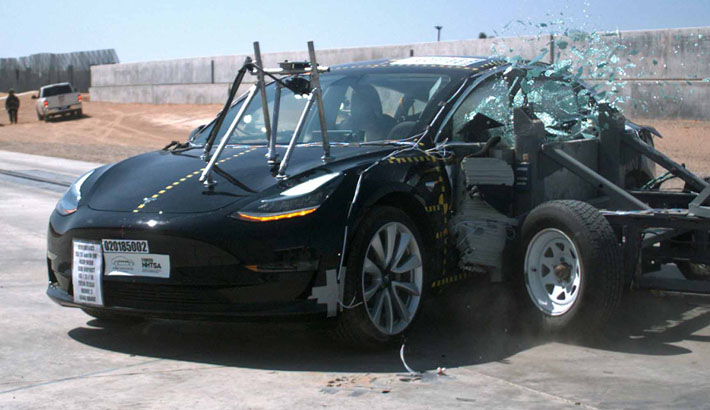
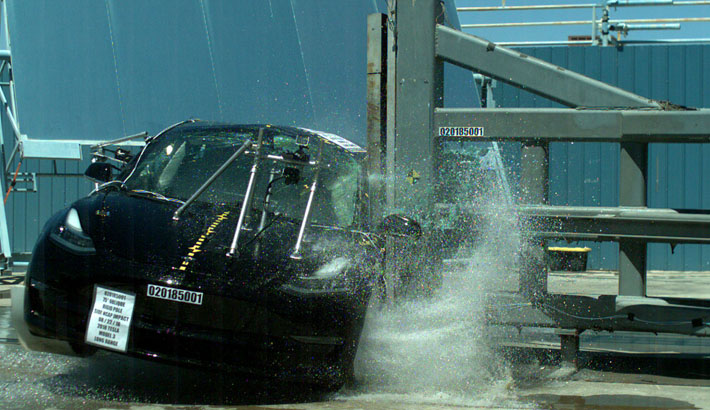
2020 Tesla Model 3 4 DR RWD in NHTSA's New Car Assessment Program. Photos are from NHTSA's crash tests.
Federal investigations that included the 2020 Tesla Model 3, and the recalls they led to.
Recent forward collision avoidance complaints filed with NHTSA, shortened. Personal details are removed.
VEHICLE INFORMATION Make/Model/Year: Tesla Model 3 (2020) Component: Steering / Autonomous Control (ADAS) INCIDENT SUMMARY While driving on Autopilot/FSD southbound from [XXX], the vehicle experienced a sudden, uncommanded lateral steering excursion (phantom steering actuation) pulling abruptly…
All Teslas vehicles running HW3 / AI3 Autopilot self driving computers have been known for years to have a defective design problem with the cooling system without its own dedicated cooling and which puts the self driving computer last in the cooling looping at the top of the cooling stack. When…
Car was sitting at a red light while in Full Self Driving (supervised). The screen showed at least four red lights. Suddenly the car started to move forward while the lights were still red. I was able to stop it from going further. This has happened before and I reported it then. If I had not had…
Decode your VIN to see the recalls for your exact car, then confirm open recalls with NHTSA.