repaired · 2021 Q1
Passenger side: inflator module
Do not driveRisk. An inflator explosion may result in sharp metal fragments striking the driver or other occupants resulting in serious injury or death.
NHTSA has logged 195 owner complaints about the 2010 Mazda CX-9, most often about the service brakes. It is covered by 6 safety recalls, and for recall 17V-429 the manufacturer reports only 44% of affected cars repaired.
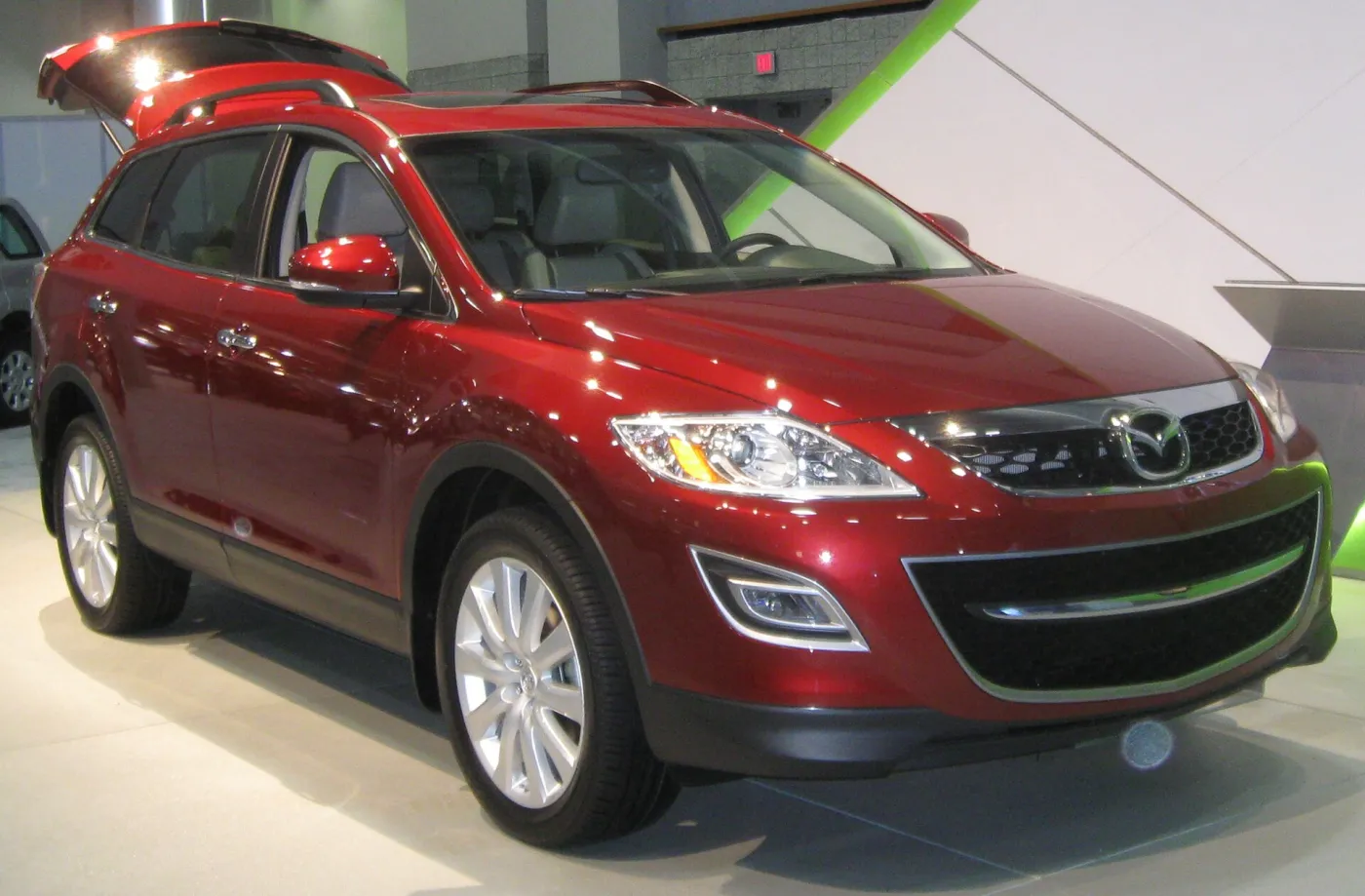
Source: NHTSA complaints, recalls, investigations and manufacturer recall reports, through June 24, 2026. Updated daily. Photo: IFCAR, Public domain.
195 complaints grouped by the system owners reported.
| System | Complaints | Crash, fire or injury |
|---|---|---|
| Service brakes | 88 | 5 |
| Engine | 23 | 0 |
| Power train | 23 | 4 |
| Air bags | 18 | 2 |
| Suspension | 16 | 0 |
| Vehicle speed control | 9 | 0 |
| Structure | 6 | 0 |
| Electrical system | 6 | 0 |
| Engine and engine cooling | 5 | 0 |
| 14 other systems | 30 | 2 |
Source: NHTSA Office of Defects Investigation. Complaints are submitted by the public and are not verified by NHTSA.
Each ring shows the share of affected cars repaired, from the manufacturer’s latest quarterly report to NHTSA. Recall repairs are free at authorized dealers.
Risk. An inflator explosion may result in sharp metal fragments striking the driver or other occupants resulting in serious injury or death.
Risk. An inflator explosion may result in sharp metal fragments striking the driver or other occupants resulting in serious injury or death.
Risk. An inflator explosion may result in sharp metal fragments striking the driver or other occupants resulting in serious injury or death.
Risk. An inflator rupture may result in metal fragments striking the vehicle occupants resulting in serious injury or death.
Risk. Over time, the ball joint corrosion may result in the front lower control arm separating from the ball joint, causing a loss of steering control and increasing…
Risk. THIS MAY CAUSE BURN DAMAGE OF THE SEAT CUSHION SURFACE, OR A RISK OF SMOKE/FIRE.
Recalls apply to specific cars. To see whether a recall is still open on yours, enter the 17-character VIN at nhtsa.gov/recalls or with Mazda.
84kmiles, median
Based on the odometer reading in 75 service brakes complaints. 69% were reported before 100,000 miles.
Dollar amounts owners wrote in their complaints when describing a repair or a quote. These are not price estimates; a system is shown only when at least 8 owners mentioned a cost.
$839median
If a problem is covered by a recall, the dealer fixes it for free. Some manufacturers also reimburse owners who paid for a repair before a recall was announced.
Bars show complaints per model year. Colors show the CarFlaw verdict: complaints weighted for crashes, fires and injuries, adjusted for years on the road and compared with the CX-9 median. How we score
2010 Mazda CX-9 4-DR.w/SAB in NHTSA's New Car Assessment Program. Photos are from NHTSA's crash tests.


Federal investigations that included the 2010 Mazda CX-9, and the recalls they led to.
Recent service brakes complaints filed with NHTSA, shortened. Personal details are removed.
The break booster went out without any warning or indicators while driving almost resulting in a collision. There are no warning lights on the dashboard.
My wife was taking my daughters for marching band and all of a sudden she tried to press the brakes but the brakes felt too hard and she was unable to stop the car safely. She had to take immediate action by moving the car to the shoulder to stop the car. There were no warning signs on the screen.…
Braking inconsistently - sometimes easy to stop, sometimes hard. I had brakes looked at, and the man said it was the brake booster. He googled it, and found a recall online and told me to take it to my dealer. It doesn't look like there's an active recall - but a lot of complaints. What's going on?…
Decode your VIN to see the recalls for your exact car, then confirm open recalls with NHTSA.