repaired · 2025 Q3
Electronic stability control (ESC)
Risk. Brakes that pull to one side may cause a sudden change in vehicle direction, increasing the risk of a crash.
NHTSA has logged 11 owner complaints about the 2018 Freightliner Cascadia, most often about the exterior lighting. It is covered by 26 safety recalls, and for recall 19V-370 the manufacturer reports only 14% of affected cars repaired.
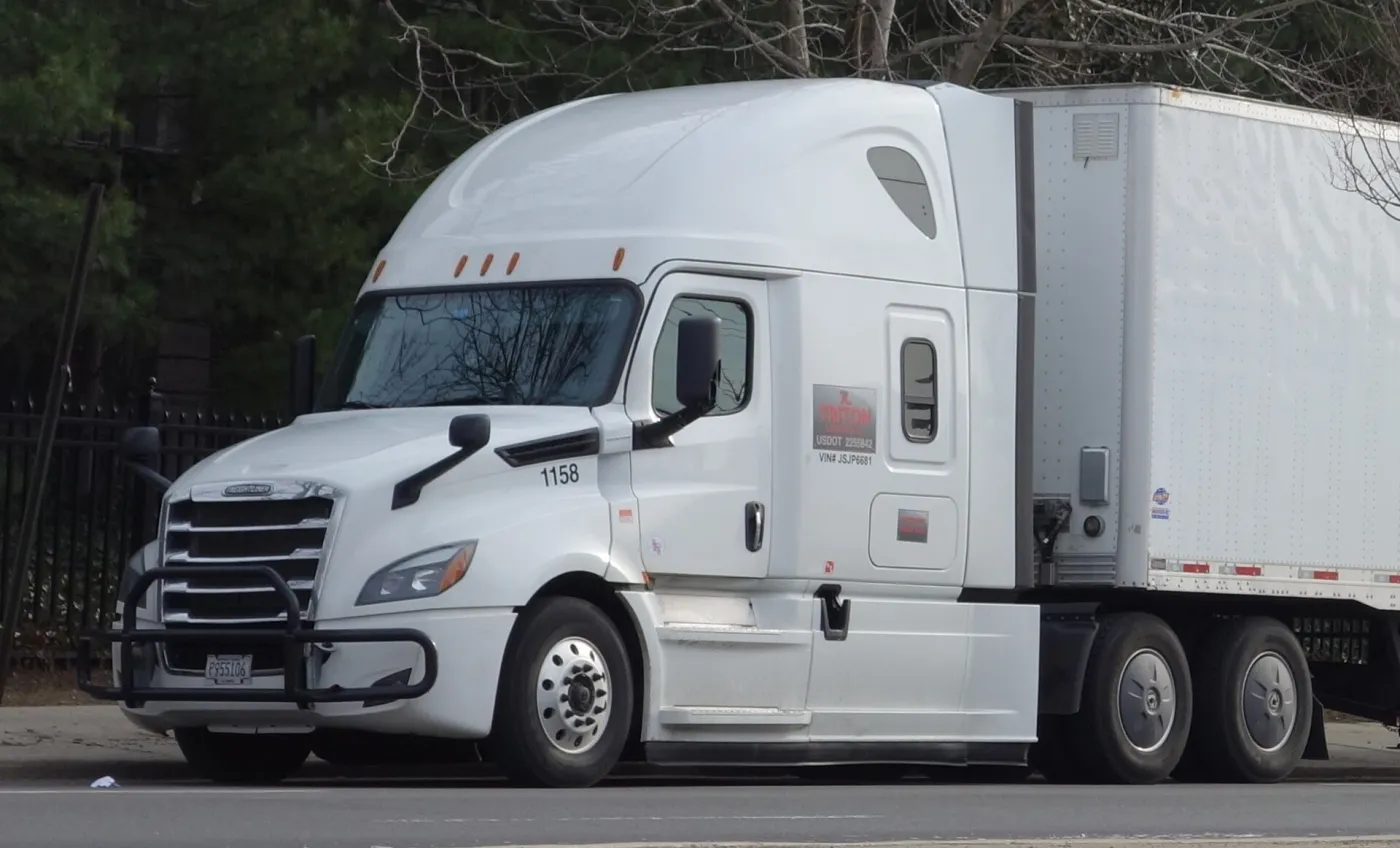
Source: NHTSA complaints, recalls, investigations and manufacturer recall reports, through February 18, 2026. Updated daily. Photo: Tdorante10, CC BY-SA 4.0.
11 complaints grouped by the system owners reported.
| System | Complaints | Crash, fire or injury |
|---|---|---|
| Exterior lighting | 4 | 0 |
| Vehicle speed control | 3 | 0 |
| Forward collision avoidance | 2 | 0 |
| Service brakes | 2 | 1 |
| Electrical system | 2 | 1 |
| Service brakes, air | 1 | 0 |
| Tires | 1 | 1 |
| Electronic stability control (ESC) | 1 | 0 |
| Air bags | 1 | 1 |
Source: NHTSA Office of Defects Investigation. Complaints are submitted by the public and are not verified by NHTSA.
Each ring shows the share of affected cars repaired, from the manufacturer’s latest quarterly report to NHTSA. Recall repairs are free at authorized dealers.
Risk. Brakes that pull to one side may cause a sudden change in vehicle direction, increasing the risk of a crash.
Risk. Brakes that pull to one side during an ACC braking event may cause a sudden change in vehicle direction, increasing the risk of a crash.
Risk. If the brake lights remain illuminated, drivers may be unaware when the truck is actually slowing or stopping, increasing the risk of a crash.
Risk. Melting components can increase the risk of fire.
Risk. Unintended vehicle movement van increase the risk of a crash.
Risk. Brakes that pull to one side during automatic braking events may cause a sudden change in vehicle direction, increasing the risk of a crash.
Risk. The vehicle's rearward visibility may be reduced, increasing the risk of a crash.
Risk. Without the alert, an operator may not be aware of an active ABS/ESC malfunction and unknowingly operate the vehicle with reduced ABS/ESC function, increasing…
Risk. An insufficient air reservoir volume may reduce brake effectiveness, increasing the risk of crash.
Risk. Unknowingly operating a truck with an ABS malfunction may increase the risk of a crash.
Risk. If the driver's frontal air bag deploys unexpectedly, it can increase the risk of a crash.
Risk. Unintended vehicle movement can increase the risk of a crash.
Risk. Loose tie rod arm bolts may lead to separation of the tie rod arm, resulting in a loss of vehicle control, increasing the risk of a crash.
Risk. If the brake lights remain activated, other drivers may be unaware that the vehicle is actually slowing or stopping, increasing the risk of a crash.
Risk. Loose brake caliper mounting bolts can reduce brake effectiveness, increasing the risk of a crash.
Risk. If the fuel line bursts, fuel may leak onto the road resulting in a roadway hazard for other motorists.
Risk. Loose brake caliper mounting bolts can reduce brake effectiveness, increasing the risk of a crash.
Risk. If the pitman arm fractures there would be a loss of steering control, increasing the risk of a crash.
Risk. Without an ABS or ESC bulb check, the operator may unaware that the warning light bulbs are not working.
Risk. If the calipers detach, there would be reduced braking performance, increasing the risk of a crash.
Risk. If the brake caliper mounting bolts loosen, braking performance may be reduced, increasing the risk of a crash.
Risk. An incorrectly installed air bag may not function correctly in a crash, increasing the risk of injury.
Risk. If the brake lights fail to illuminate, there would not be a signal to other motorists that the vehicle is slowing, increasing the risk of a crash.
Risk. If the transmission cannot be shifted out of gear range 7 through 12, the engine may stall, increasing the risk of a crash.
Risk. A loss of steering control increases the risk of a crash.
Risk. If the tow hook fails without warning during a recovery operation, the sudden release of the vehicle may increase the risk of injury.
Recalls apply to specific cars. To see whether a recall is still open on yours, enter the 17-character VIN at nhtsa.gov/recalls or with Freightliner.
Bars show complaints per model year. Colors show the CarFlaw verdict: complaints weighted for crashes, fires and injuries, adjusted for years on the road and compared with the Cascadia median. How we score
Federal investigations that included the 2018 Freightliner Cascadia, and the recalls they led to.
Recent exterior lighting complaints filed with NHTSA, shortened. Personal details are removed.
The contact owns a 2018 Freightliner Cascadia. The contact stated that while the vehicle was turned off, the brake lights remained illuminated. The vehicle was not diagnosed nor repaired by an independent mechanic or dealer. The manufacturer was not made aware of the failure. The failure mileage…
Break lights stay on when truck is moving. It confuses drivers following the truck.other motorists would not know whether the truck is slowing down
Decode your VIN to see the recalls for your exact car, then confirm open recalls with NHTSA.