repaired · 2023 Q4
Steering: hydraulic power assist system
Risk. An oil leak may cause a sudden loss of power steering assist, increasing the risk of a crash.
NHTSA has logged 135 owner complaints about the 2011 Toyota Tundra, most often about the engine. It is covered by 10 safety recalls, and for recall 14V-743 the manufacturer reports only 27% of affected cars repaired.
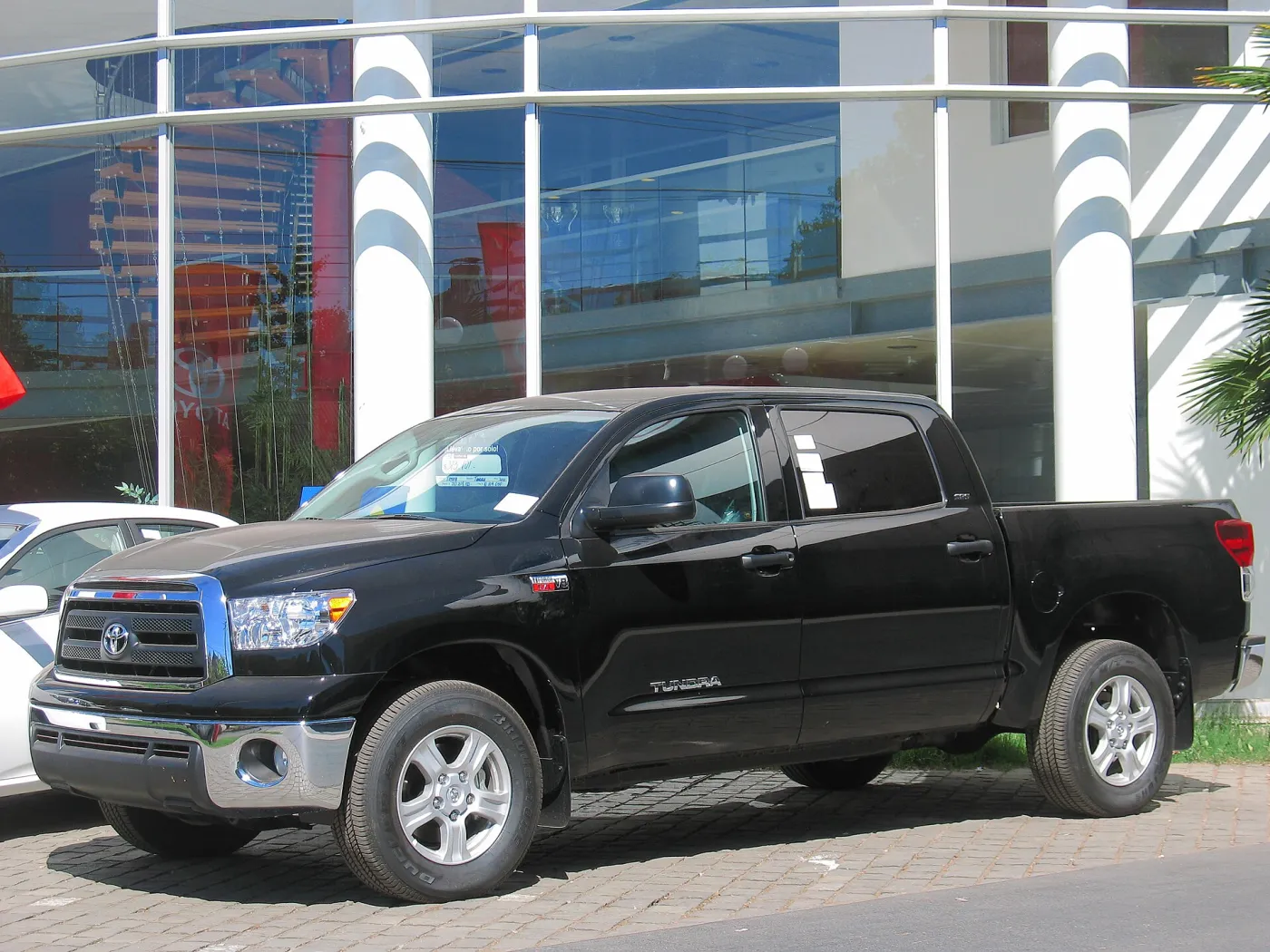
Source: NHTSA complaints, recalls, investigations and manufacturer recall reports, through November 3, 2026. Updated daily. Photo: order_242 from Chile, CC BY-SA 2.0.
135 complaints grouped by the system owners reported.
| System | Complaints | Crash, fire or injury |
|---|---|---|
| Engine | 35 | 0 |
| Electrical system | 22 | 1 |
| Steering | 19 | 1 |
| Power train | 18 | 3 |
| Fuel/propulsion system | 15 | 0 |
| Structure | 11 | 0 |
| Service brakes | 10 | 2 |
| Vehicle speed control | 9 | 2 |
| Air bags | 6 | 3 |
| 8 other systems | 20 | 0 |
Source: NHTSA Office of Defects Investigation. Complaints are submitted by the public and are not verified by NHTSA.
Each ring shows the share of affected cars repaired, from the manufacturer’s latest quarterly report to NHTSA. Recall repairs are free at authorized dealers.
Risk. An oil leak may cause a sudden loss of power steering assist, increasing the risk of a crash.
Risk. If the sliding electrical contacts are not protected by lubricant, debris and moisture that get into the switch may cause a short circuit and the switch…
Risk. Damage to the seat heater wiring could cause the wires to short, increasing the risk of the seat burning and causing personal injury to the occupant.
Risk. An inaccurate label could lead to owners overloading their vehicles and tires.
Risk. If the front passenger seat occupant sensing system is out of calibration, the front passenger airbags may not deploy or they may deploy inappropriately for…
Risk. AN INACCURATE LABEL COULD LEAD TO VEHICLE OVERLOADING WHICH COULD RESULT IN TIRE FAILURE, INCREASING THE RISK OF A CRASH.
Risk. DRIVERS WILL NOT RECEIVE A WARNING FROM THE TIRE PRESSURE MONITOR THAT ONE OR MORE TIRES ARE UNDERINFLATED, INCREASING THE RISK THAT THE VEHICLE WILL BE DRIVEN…
Risk. THE DRIVER COULD EXPERIENCE LOSS OF MOTIVE POWER AND VEHICLE CONTROL, INCREASING THE RISK OF A CRASH.
Risk. DRIVERS WILL NOT RECEIVE A WARNING FROM THE TIRE PRESSURING MONITOR THAT ONE OR MORE TIRES ARE UNDERINFLATED INCREASING THE RISK THAT A VEHICLE WILL BE DRIVEN…
Risk. FAILURE TO WARN OF TIRE DEFLATIONS IS A NON-COMPLIANCE WITH FMVSS 138 AND COULD LEAD TO TIRE FAILURE INCREASING THE RISK OF A CRASH.
Recalls apply to specific cars. To see whether a recall is still open on yours, enter the 17-character VIN at nhtsa.gov/recalls or with Toyota.
70kmiles, median
Based on the odometer reading in 26 engine complaints. 73% were reported before 100,000 miles.
Bars show complaints per model year. Colors show the CarFlaw verdict: complaints weighted for crashes, fires and injuries, adjusted for years on the road and compared with the Tundra median. How we score
2011 Toyota Tundra PU/RC AWD in NHTSA's New Car Assessment Program. Photos are from NHTSA's crash tests.
Recent engine complaints filed with NHTSA, shortened. Personal details are removed.
The contact owns a 2011 Toyota Tundra. The contact stated while driving at an undisclosed speed, the check engine waning light illuminated. The vehicle was taken to the dealer to be diagnosed. The contact was informed of secondary error in the injection system caused by water intrusion. The contact…
* According to the different computers codes the issue is Secondary Air Injection Pump failure. *Driving on the highway I had the limp mode which created a drastic velocity drop from 70 mph to 40 mph which created a situation that almost ended up in having another car hitting me from behind. this…
1. The secondary air injection valve and/or air injection pump. 2. Sometimes the vehicle will go into "limp" mode and only go 35 mph. If the switch valve is stuck "closed" like mine, the car may not be able to dilute the exhaust fumes and the fumes and travel into the cabin of the vehicle. 3. Yes,…
Decode your VIN to see the recalls for your exact car, then confirm open recalls with NHTSA.