no report yet
Equipment adaptive/mobility
Risk. If the platform side plates crack or the platform mounting fails from out-of-position bearings, the lift platform can separate from the lift and come to rest…
NHTSA has logged 53 owner complaints about the 2006 Ford E-350, most often about the engine and engine cooling. It is covered by 37 safety recalls, and for recall 14V-706 the manufacturer reports only 26% of affected cars repaired.
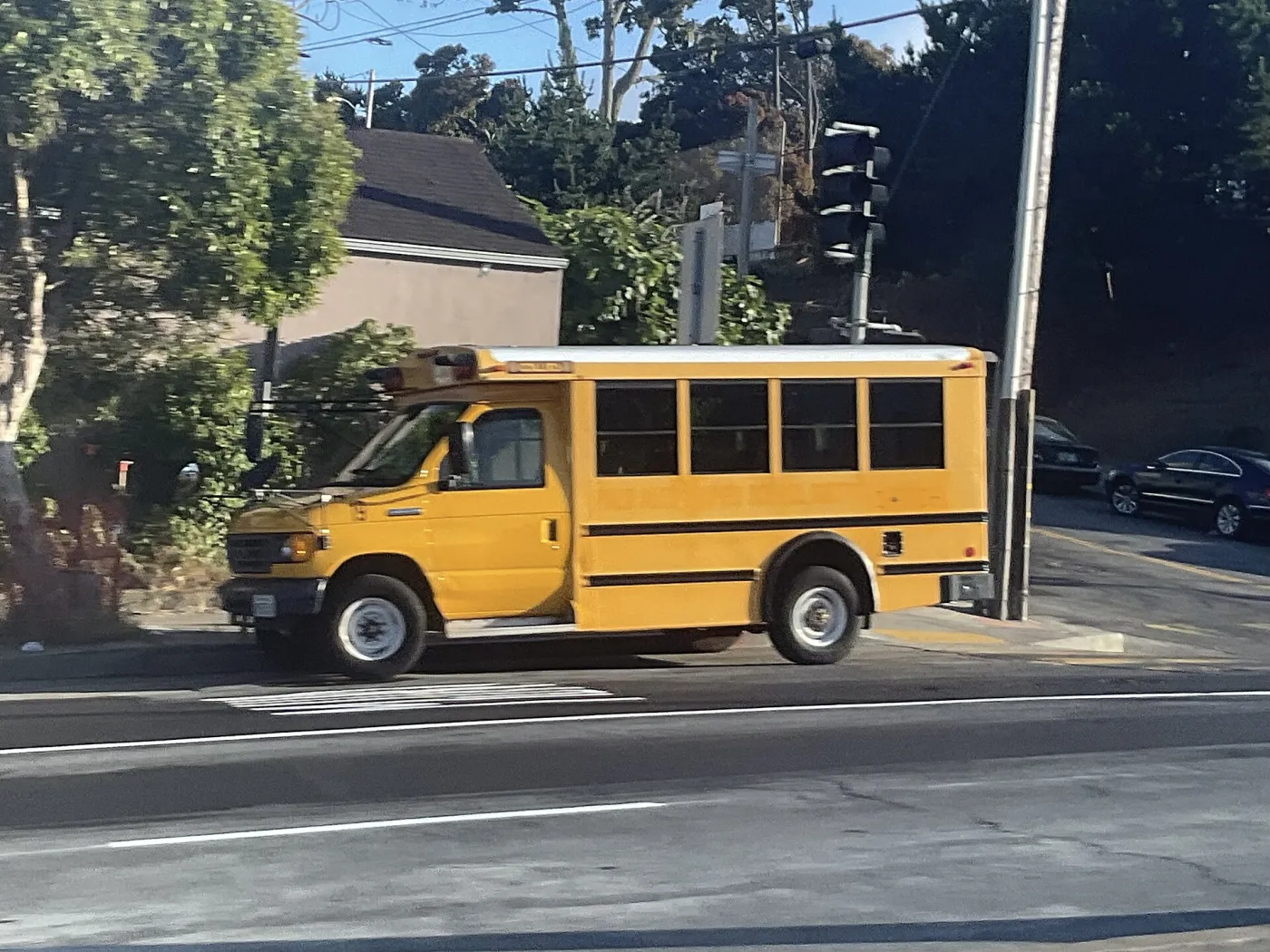
Source: NHTSA complaints, recalls, investigations and manufacturer recall reports, through December 23, 2024. Updated daily. Photo: Thomasfan1916, CC BY-SA 4.0.
53 complaints grouped by the system owners reported.
| System | Complaints | Crash, fire or injury |
|---|---|---|
| Engine and engine cooling | 13 | 3 |
| Steering | 9 | 2 |
| Electrical system | 7 | 2 |
| Structure | 5 | 2 |
| Service brakes, hydraulic | 5 | 1 |
| Tires | 4 | 0 |
| Fuel system, diesel | 4 | 0 |
| Engine | 4 | 0 |
| Power train | 3 | 1 |
| 11 other systems | 18 | 2 |
Source: NHTSA Office of Defects Investigation. Complaints are submitted by the public and are not verified by NHTSA.
Each ring shows the share of affected cars repaired, from the manufacturer’s latest quarterly report to NHTSA. Recall repairs are free at authorized dealers.
Risk. If the platform side plates crack or the platform mounting fails from out-of-position bearings, the lift platform can separate from the lift and come to rest…
Risk. If the bearings move out of position, the stowed platform may have excessive movement resulting in failure of the platform mounting.
Risk. If the platform side plates crack, the lift platform can separate from the lift and come to rest against the vehicle's lift door.
Risk. If the bearings move out of position, the stowed platform may have excessive movement resulting in failure of the platform mounting.
Risk. If the platform side plates crack, the lift platform can separate from the lift and come to rest against the vehicle's lift door.
Risk. If the platform side plates crack, the lift platform can separate from the lift and come to rest against the vehicle's lift door.
Risk. If the platform side plates crack, the lift platform can separate from the lift and come to rest against the vehicle's lift door.
Risk. If the platform side plates crack, the lift platform can separate from the lift and come to rest against the vehicle's lift door.
Risk. If the cable does not clear the wheel chair lift it may contact the power lug and, if it does not have a nonconductive cover, or it has an improperly installed…
Risk. IF A LOSS OF SERVICE BRAKE PRESSURE OCCURS, THE DRIVER MAY NOT BE ABLE TO CONTROL THE VEHICLE, INCREASING THE RISK OF A CRASH
Risk. IF SUFFICIENT ARCING OCCURS, THE FUSE HOLDER MAY MELT, AND MAY BE ACCOMPANIED BY FLAME, SMOKE AND POTENTIAL FIRE.
Risk. THIS DEFECT COULD RESULT IN A FIRE.
Risk. A LIFT OCCUPANT CAN BE INJURED SHOULD THE LIFT BEGIN TO STOW UNINTENTIONALLY.
Risk. THE USER OF THE LIFT COULD BE INJURED SHOULD THE LIFT MOVE UNINTENTIONALLY.
Risk. THE USER OF THE LIFT COULD BE INJURED SHOULD THE LIFT MOVE UNINTENTIONALLY.
Risk. THE USER OF THE LIFT COULD BE INJURED SHOULD THE LIFT MOVE UNINTENTIONALLY.
Risk. THE USER OF THE LIFT COULD BE INJURED SHOULD THE LIFT MOVE UNINTENTIONALLY.
Risk. A LIFT OCCUPANT CAN BE INJURED SHOULD THE LIFT BEGIN TO STOW UNINTENTIONALLY.
Risk. A LIFT OCCUPANT CAN BE INJURED SHOULD THE LIFT BEGIN TO STOW UNINTENTIONALLY.
Risk. A LIFT OCCUPANT CAN BE INJURED SHOULD THE LIFT BEGIN TO STOW UNINTENTIONALLY.
Risk. THE USER OF THE LIFT COULD BE INJURED SHOULD THE LIFT MOVE UNINTENTIONALLY.
Risk. A LIFT OCCUPANT CAN BE INJURED SHOULD THE LIFT BEGIN TO STOW UNINTENTIONALLY.
Risk. THE USER OF THE LIFT COULD BE INJURED SHOULD THE LIFT MOVE UNINTENTIONALLY.
Risk. A LIFT OCCUPANT CAN BE INJURED SHOULD THE LIFT BEGIN TO STOW UNINTENTIONALLY.
Risk. THE USER OF THE LIFT COULD BE INJURED SHOULD THE LIFT MOVE UNINTENTIONALLY.
Risk. A LIFT OCCUPANT CAN BE INJURED SHOULD THE LIFT BEGIN TO STOW UNINTENTIONALLY.
Risk. THE USER OF THE LIFT COULD BE INJURED SHOULD THE LIFT MOVE UNINTENTIONALLY.
Risk. A LIFT OCCUPANT CAN BE INJURED SHOULD THE LIFT BEGIN TO STOW UNINTENTIONALLY.
Risk. THE USER OF THE LIFT COULD BE INJURED SHOULD THE LIFT MOVE UNINTENTIONALLY.
Risk. A LIFT OCCUPANT CAN BE INJURED SHOULD THE LIFT BEGIN TO STOW UNINTENTIONALLY.
Risk. A LIFT OCCUPANT CAN BE INJURED SHOULD THE LIFT BEGIN TO STOW UNINTENTIONALLY.
Risk. THE USER OF THE LIFT COULD BE INJURED SHOULD THE LIFT MOVE UNINTENTIONALLY.
Risk. THE USER OF THE LIFT COULD BE INJURED SHOULD THE LIFT MOVE UNINTENTIONALLY.
Risk. A LIFT OCCUPANT CAN BE INJURED SHOULD THE LIFT BEGIN TO STOW UNINTENTIONALLY.
Risk. THE USER OF THE LIFT COULD BE INJURED SHOULD THE LIFT MOVE UNINTENTIONALLY.
Risk. FUEL LEAKAGE IN THE PRESENCE OF AN IGNITION SOURCE COULD RESULT IN A FIRE.
Risk. AFTER A PERIOD OF CONTINUOUS USE ON THE HIGH SPEED SETTING, LACK OF GREASE ON THE OUTPUT SHAFT GEAR MAY CAUSE THE GEAR TO DISTORT OR FRACTURE DURING OPERATION…
Recalls apply to specific cars. To see whether a recall is still open on yours, enter the 17-character VIN at nhtsa.gov/recalls or with Ford.
Bars show complaints per model year. Colors show the CarFlaw verdict: complaints weighted for crashes, fires and injuries, adjusted for years on the road and compared with the E-350 median. How we score
Federal investigations that included the 2006 Ford E-350, and the recalls they led to.
Recent engine and engine cooling complaints filed with NHTSA, shortened. Personal details are removed.
TL* THE CONTACT OWNS A 2006 FORD F-350. THE CONTACT STATED THAT THE EGR VALVES MALFUNCTIONED AND AS A RESULT, RADIATOR FLUID LEAKED INTO THE MOTOR. THE VEHICLE WAS TAKEN TO THE DEALER WHO DIAGNOSED THAT THE EGR VALVE AND OIL COOLER NEEDED TO BE REPLACED. THE MANUFACTURER WAS MADE AWARE OF THE…
SPARK PLUG BLOW OUT ON A 2006 FORD E350 5.4 LITER ENGINE. CAUSES FUEL TO SPRAY OUT AND FIRE TO IGNITE. THIN ALUMINUM HEAD IS NOT STRONG ENOUGH TO HOLD SPARK PLUG IN PLACE. THERE ARE OVER 5 MILLION WEB PAGES CONCERNING THIS ISSUE. *TR
FORD 6.0 DIESEL ENGINES HAVE ISSUES IN RESPECT TO THE SEALS ON THE OIL PUMPS FOR THE INJECTION SYSTEM. IT IS NOT A QUESTION OF IF THE SEALS WILL FAIL, IT'S WHEN. WHEN THE SEALS FAIL, THE ENGINE WILL SHUT DOWN COMPLETELY LEAVING THE DRIVER WITHOUT POWER STEERING OR BRAKES. I HAVE TWO (2) VEHICLES…
Decode your VIN to see the recalls for your exact car, then confirm open recalls with NHTSA.